
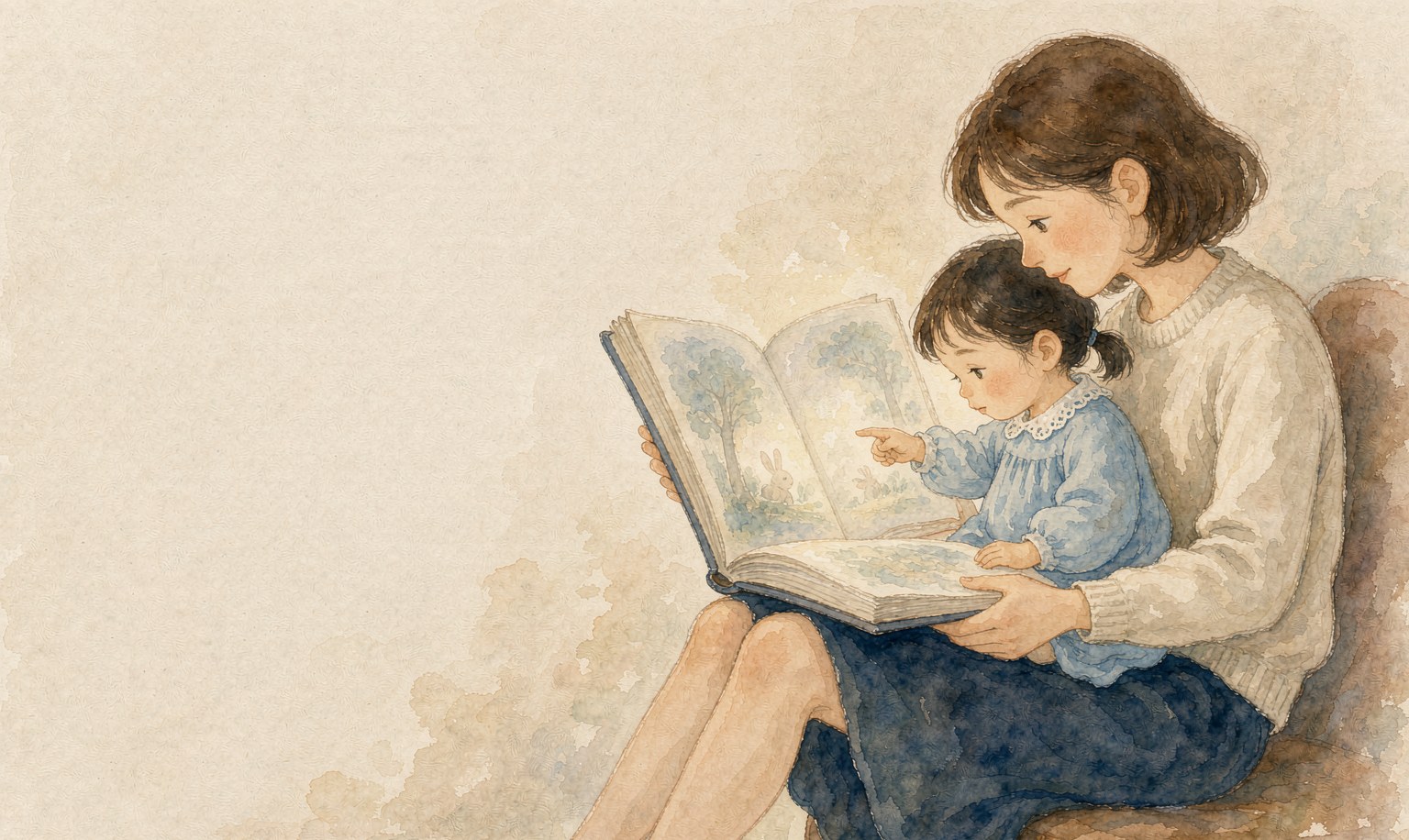
A picture book often begins with one sentence you want to say to one child. Our work is to turn that sentence into a book that can sit on a shelf — from shaping the story and making the illustrations to layout, printing, ISBN registration and bookstore distribution. You can hand us the whole process, or just one part of it.
Your child’s drawings, made into a real book
Parents who come to us usually arrive with a bundle of drawings — comics, doodles, little stories of their own invention. Most of them end up in a drawer, or as photos on a phone, and in a few years they cannot be found. Making them into a picture book is one way to keep them; it is also the first time the child is taken seriously as an author.
The book itself is thin. What the experience leaves in the child usually lasts far longer.
- Being taken seriouslyTheir drawing is printed, their name is on the cover, the book sits in a shop or a library. Someone is saying, in earnest: your story was worth printing. That feeling of being seen is the firmest ground confidence can stand on.
- Saying what you meanA book means shaping the story, planning the pages, writing the words and revising again and again. Without noticing, the child practises making themselves understood — the real starting point for writing and speaking.
- Finishing something wholeFrom roughs to finished copies, the child walks a complete creative process for the first time, and learns how a book is actually made. The memory of “I finished it” comes back to help when things get hard later.
- A gift that lasts a lifetimeA book that can still be opened in ten or twenty years: evidence of a childhood, and one of the things most likely to be taken down from the shelf in adulthood.
Five steps to a finished picture book
Every maker works differently, but on paper it usually comes down to these five steps.
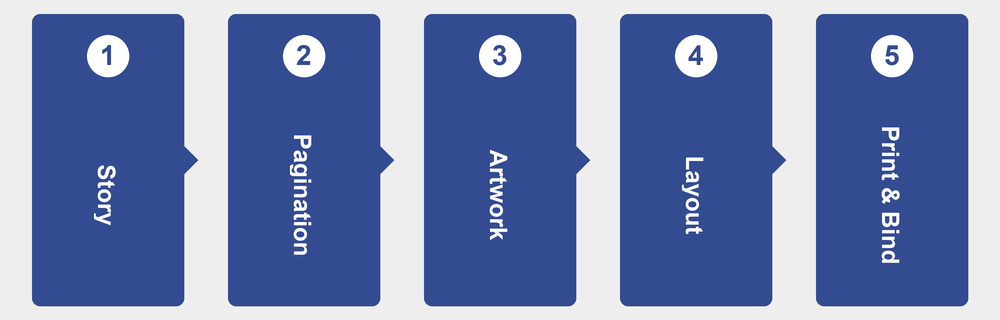
- Shape the storyDecide what you want to say, and to whom, then build the story around it. Picture books usually follow a four-part arc: setup, development (over 80% of the text), the turn where the theme lands, and resolution.
- Make a page planA page plan (daiwari) decides what goes on which page. Divide the story across spreads and draw roughs from it.
- Draw the final artworkOnce the roughs are approved, draw the final art. If colour runs to the paper edge, extend the artwork 3 mm on every side — the bleed is trimmed after binding.
- Scan and lay outScan hand-drawn originals into digital files, or work digitally from the start, then combine text and images at the layout stage.
- Print and bindHardcover with sewn signatures: sturdy enough for small hands that turn pages hard.
Specifications and file requirements
- Binding
- Hardcover, sewn signatures
- Extent
- A multiple of 4 pages; the last page is the colophon
- Bleed
- 3 mm on all four sides, trimmed after binding
- Colour
- CMYK
- Files
- PDF (Acrobat high quality) or AI / PSD / INDD (CS6 or earlier)
- Type
- Converted to outlines, with an editable copy kept
- Images
- Embedded, or packaged together with linked files
Small print runs that still reach bookstores
Conventional self-publishing means millions of yen and boxes of stock in the spare room. We use on-demand printing for small-lot commercial publishing, so your book can actually be sold in bookstores and online.
- On-demand printing, from 100 copies: Print what you need, reprint when it sells — no stock to store.
- ISBN and distribution: ISBN registration, publisher listing and legal deposit with the National Diet Library, handled for you.
- Sales channels: Bookstores nationwide (through distributors), Amazon and Google Books.
- Royalties: Royalties are paid on copies sold through our channels.
Cost guide
The question we hear most is simply: what does one picture book cost? Two common examples show it — the same square format, one at 20 pages and one at 32, 200 copies printed, of which the author buys 100 at the list price.
| Plan A20 pages, slimmer | Plan B32 pages, fuller | |
|---|---|---|
| Format | 200 × 200 mm (square) | 200 × 200 mm (square) |
| Extent | 20 pages | 32 pages |
| Printing | Full colour, text and cover | Full colour, text and cover |
| Binding | Hardcover, sewn signatures | Hardcover, sewn signatures |
| Endpapers | Coloured uncoated stock | Coloured uncoated stock |
| Files | Print-ready PDF / AI / PSD | Print-ready PDF / AI / PSD |
| Royalty | 5% of the list price | 5% of the list price |
| Print run | 200 copies | 200 copies |
| Author copies | 100 copies (at list price) | 100 copies (at list price) |
| List price | US$10 | US$13 |
| Author purchase | US$1,510for 100 copies | US$1,888for 100 copies |
| Distribution fee | US$440 | US$440 |
| Total payable | US$1,950 | US$2,328 |
| Cost per copy | about US$20 | about US$23 |
Three terms in the table, in plain words.
- 100 author copies: After printing you buy 100 copies at the list price — to give away, or to sell yourself.
- Distribution fee: A one-off fee covering the ISBN and the publisher listing, so the book can be sold in shops and online.
- Total payable: What you actually pay. Divide it by 100 and you have the cost of each copy in your hands.
Need only one part? Item prices
| Item | What it covers | Guide price |
|---|---|---|
| Illustration | Turning the story into pictures, roughs included | US$189 and up / piece |
| Scanning | Hand-drawn art digitised, up to A3 | US$3 / piece |
| Colour correction | Post-scan adjustment, by complexity | US$9 and up / piece |
| Text input | Handwritten manuscript typed up | US$6 / 1,000 characters |
| Simple layout | Text on one page, art on the facing page | US$3 / spread |
| Designed layout | Text placed around the artwork | US$19 and up / spread |
Amounts are indicative, converted at November 2026 rates; tax and shipping are excluded, and international delivery is charged separately. Illustration, scanning and text input are priced per item above; printing and binding vary with format, extent and print run. The formal quotation prevails.
Frequently asked questions
- I cannot draw. Can I still publish a picture book?
- Yes. We can produce the illustrations for you, working from roughs you approve.
- My manuscript is already finished.
- Then you may need only layout, printing and publication — at a considerably lower cost.
- What is the minimum print run?
- 100 copies, with reprints available afterwards.
- How long does the whole process take?
- It depends on the extent and how finished your files are; the schedule is fixed during consultation.
Tell us what you have in mind
Japanese, Chinese and English · Free quotation
Contact us Email: llj@jpxcn.com